


Safety Guide for the Class of 2026
University life will bring long hours in studios and design laboratories, new ideas and the work of developing a creative practice. Safety and health must remain the foundation of those pursuits.
Students entering a new academic and living environment may be especially vulnerable to telecommunications fraud and other risks. This guide addresses three frequent concerns for art and design students: online and telephone fraud, fire safety in residences and studios, and travel safety. It also covers online privacy, personal relationships, national security, and healthy routines.
1 Fraud Prevention and Property Security
Universities are frequent targets of telecommunications and online fraud. Remember four rules: do not trust unverified claims, do not disclose personal information, do not transfer money, and verify requests through multiple channels.
Art and design students should be particularly cautious when accepting commissions, enrolling in art training, buying materials, or purchasing digital art equipment. Scams often target these activities.
Common schemes include paid-task rebate scams, fake commissions, training programs that promise work or employment, false compensation claims, game-account transactions, people impersonating counselors or faculty to collect fees, illegal campus loans, and people impersonating police, prosecutors or courts.

Be highly cautious when strangers contact you through WeChat or QQ and ask for a deposit, training fee or security payment. Claims that simple drawings can earn high pay or that a fee will provide access to major commercial commissions are often fraudulent.
Never disclose bank card passwords or SMS verification codes, and reject screen-sharing requests from strangers. Verify any request involving a money transfer with your counselor and family members.
Keep your identity card, student ID and campus card secure, and report and replace lost cards immediately. Lock away laptops, drawing tablets, cameras and other valuable equipment when leaving your room. Do not keep large amounts of cash in the residence hall.
Avoid campus loans, predatory loans and cosmetic-procedure loans. Do not borrow beyond your means to buy art materials or digital equipment.
Reject door-to-door sales in residence halls. Do not scan unknown codes to buy supposedly internal art supplies or training courses that promise guaranteed results.
Do not rent, lend or sell bank cards, SIM cards, social media accounts or payment accounts. Do not participate in fake-order schemes, money-mule activity or fabricated transaction flows. Such conduct may constitute the criminal offense of aiding information network crime.
2 Fire Safety in Residence Halls
Paper, canvas and paint thinner are flammable, and art students may keep these materials in their rooms. Crowded spaces containing clothing, bedding, sketches and supplies can create a serious fire risk when electricity is used improperly. Violations of fire safety rules will be handled under university regulations.
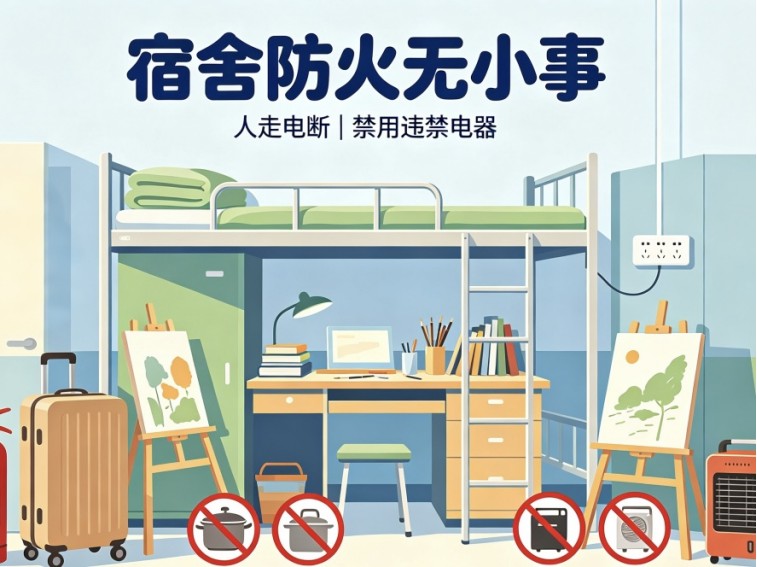
Do not use prohibited high-power appliances such as immersion heaters, electric cookers, space heaters or electric blankets. Hair dryers, curling irons and other heat-producing appliances are also prohibited in residence rooms. Do not connect power strips improperly, stack them, or place them under bedding, clothing, sketches or other combustible materials.
Open flames are prohibited. Do not smoke, light candles or mosquito coils, or burn paper, sketches or other materials in residence rooms.
Unplug electrical devices before leaving. Do not charge phones or power banks throughout the night, and disconnect power when the room is unoccupied. Do not bring electric-vehicle batteries or low-quality power banks into the residence hall for charging. Keep charging devices away from bedding and paper.
Do not place drawing boards, frames, art supplies, luggage or other items at room entrances, in corridors or in fire exits. Never block fire extinguishers or hydrants.
3 Travel Safety
Remain alert while traveling to campus for registration and during everyday trips away from campus.

When traveling by train, high-speed rail or long-distance bus, keep your identity card, admission materials, phone and wallet secure. Do not trust strangers at stations who offer registration help or low-cost transportation. Keep luggage in sight and do not accept items from strangers for safekeeping. After arrival, use only official university welcome channels. Complete payments and paperwork at the college welcome station or another designated campus location, not through off-campus individuals.
Travel with others when possible, especially at night. Avoid isolated areas and tell your roommates where you are going and when you expect to return.
Use public buses, the subway or licensed ride-hailing services. Refuse unlicensed or overloaded vehicles. Do not look at your phone continuously while walking; stay aware of traffic and surroundings.
Obey traffic laws when riding a bicycle or electric bicycle. Do not ride against traffic or exceed speed limits, and always wear a helmet on an electric bicycle.
Do not accept drinks, food or cigarettes from strangers. Avoid high-risk entertainment venues and learn to recognize new forms of illegal drugs.
Do not swim or play in campus landscape lakes or in rivers and ponds. If someone is in the water and needs help, call for assistance and emergency services rather than entering the water without proper rescue training.
4 Online and Privacy Safety
Do not believe, create or spread rumors. Communicate responsibly on social media and avoid online disputes and malicious comments.
Be cautious when joining unfamiliar online groups. Do not open unknown links or install software from unofficial sources, and protect personal information from malware.
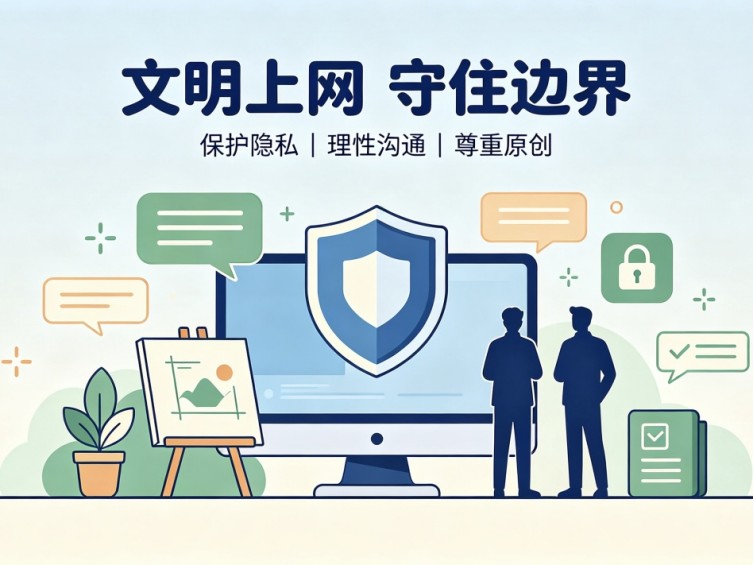
Art and design students should protect their original work and copyright. Do not disclose source files, photograph and distribute unpublished design projects without permission, or upload images of identity documents to unfamiliar websites.
5 Personal Relationships and Dating Safety
Use care when forming new relationships, particularly with people unaffiliated with the university. Avoid unsafe venues and do not engage in fighting or group disturbances.
Treat roommates and classmates with patience. Address disagreements through calm communication and avoid impulsive or aggressive behavior.
Approach online relationships carefully and do not meet an unfamiliar online contact alone. Do not make large transfers or loans in a relationship. If you experience harassment, coercion or harm, tell your counselor and family promptly and contact the police when necessary.
6 National Security and Ideological Security
Maintain awareness of national security. Do not distribute internal university documents, research materials or unpublished design project materials without authorization. Do not visit illegal overseas websites, and avoid vulgar or harmful content.
Do not participate in illegal organizations, underground salons, or interviews and lectures privately organized by overseas organizations. Decline research interviews initiated by unfamiliar overseas individuals or organizations.
7 Healthy Routines and Food Safety
Design deadlines are common, but prolonged sleep deprivation is harmful. Balance work and rest, exercise regularly and protect your health.
Choose university dining halls when possible. Limit food from street vendors and unlicensed delivery providers, and do not eat expired food or food in damaged packaging.
Emergency Contact
In an emergency, contact your counselor and the TUST Security Department immediately.
TUST Security Department 24-hour duty number:
Hexi Campus: 022-60602110
Creative work depends on personal safety and health. The college encourages every member of the Class of 2026 to make these practices part of daily life while developing ideas and professional skills at TUST.